

ABOUT US





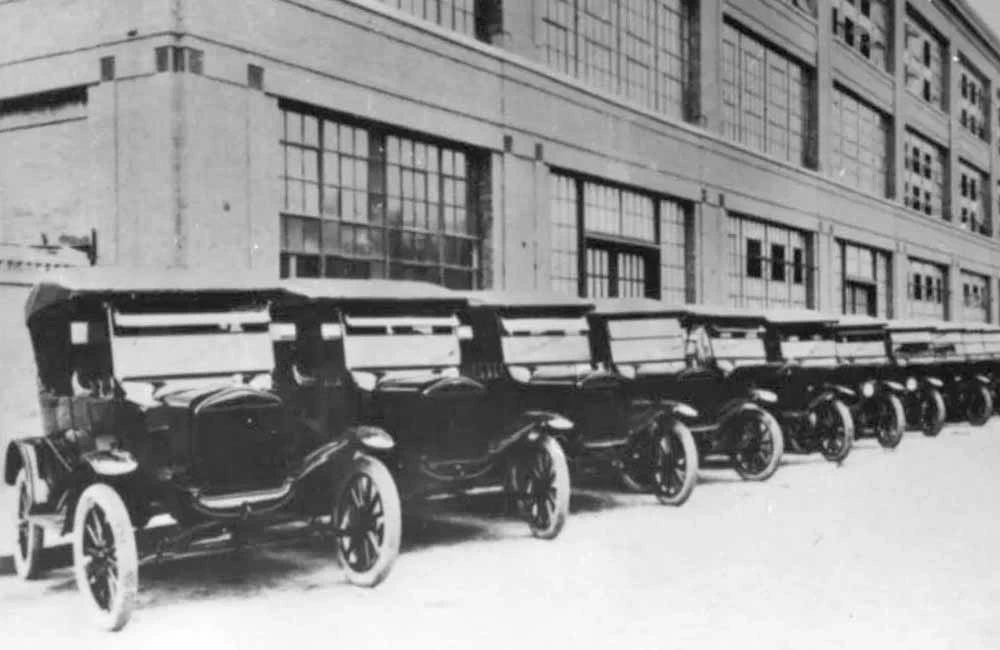
 Ford first factory in Brazil, in São Paulo (MIAU Museu/Anfavea/courtesy)
The automotive industry in South America began to take shape in the 1910s, at a time when the continent was seen as a promising opportunity by American carmakers seeking new markets.
Brazil and Argentina played leading roles in this early phase—a position they continue to hold today. Brazil attracted the first investments from manufacturers such as Ford and General Motors, while Argentina received a Ford plant as early as 1913, dedicated to assembling vehicles from kits imported from the United States.
From the outset, Argentina also drew interest from European brands, including Fiat and Mercedes-Benz, which partnered with local groups to sell their cars through semi-knocked-down (SKD) and completely knocked-down (CKD) kits.
Ford’s operations in Brazil officially began in 1919, although as early as 1917 Ford Model T vehicles were already rolling off assembly lines using pre-assembled kits. General Motors would only inaugurate its Brazilian plant in 1930, in a municipality near São Paulo.
According to Brazil’s National Association of Automotive Vehicle Manufacturers, Anfavea, more than 2,600 cars were already circulating in the country by 1917.
By 1930, Argentina had become the second-largest foreign market for American automakers, trailing only Canada.
Between 1942 and 1970, the automotive landscape in both countries was shaped by the emergence of domestic manufacturers. This movement was driven by the weakening of international trade following the 1930 economic crisis and the impact of World War II. As a result, national brands emerged to produce locally developed models, vehicles built under license from foreign automakers, and, to a lesser extent, imported cars.
One notable example was Brazil’s Vemag, which manufactured vehicles from Germany’s DKW under license until 1967, when it was acquired by Volkswagen. In Argentina, a similar case was Ika, a company with mixed national ownership and ties to Kaiser Motors.
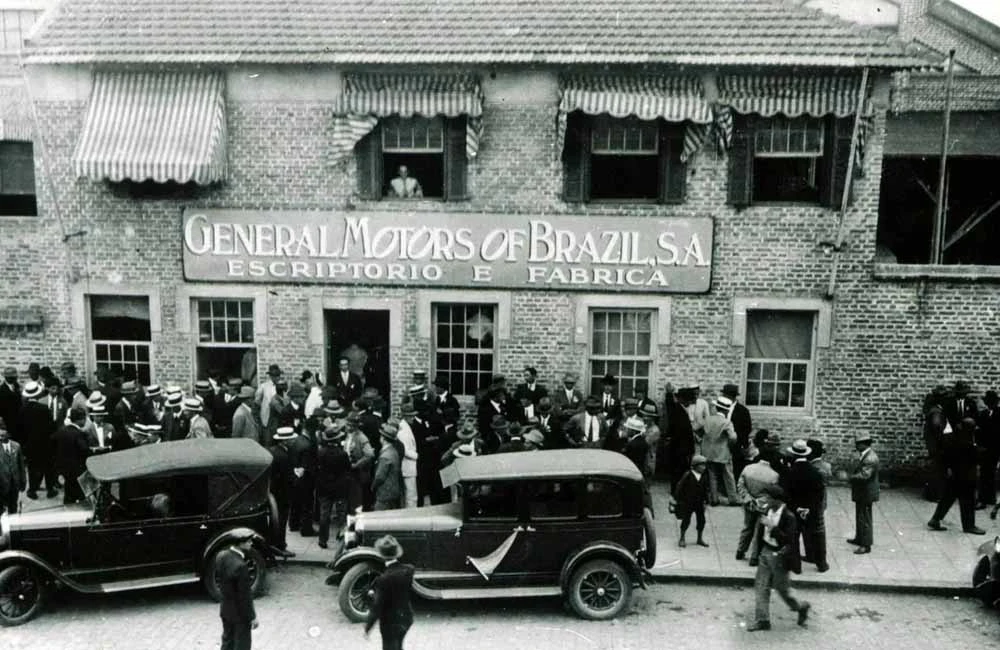 General Motors’ first factory in Brazil, in São Paulo (MIAU Museu/Anfavea/courtesy)
Volkswagen entered Brazil in 1953 as an importer before establishing local production. It introduced the Typ 1—known in the United States as the Beetle—which became famously known in Brazil as the “Fusca.” In Argentina, the same model was marketed as the “Escarabajo.”
The decisive push toward a robust automotive industry in Brazil came in 1957, when the country gained a president closely aligned with industrial development. Under President Juscelino Kubitschek, large-scale automobile production became a national priority, overtaking sectors that had previously been central to economic policy, such as rail transport.
During this period, manufacturers including Ford, Willys, Mercedes-Benz and Volkswagen consolidated their presence in Brazil, alongside domestic brands such as DKW and FNM. Notably, until 1968 General Motors in Brazil focused exclusively on commercial vehicles, reflecting a country that was still largely rural at the time.
This marked the foundation of the modern automotive industries in Brazil and Argentina. From the 1960s onward, domestic manufacturers in Brazil gradually lost ground to foreign brands as the national economy weakened—a subject for another article. In Argentina, local groups also lost prominence, but did not disappear entirely, instead forming partnerships with international automakers. Fiat, for example, operated in Argentina until 1996 through a partnership with the Sevel group.
Comments